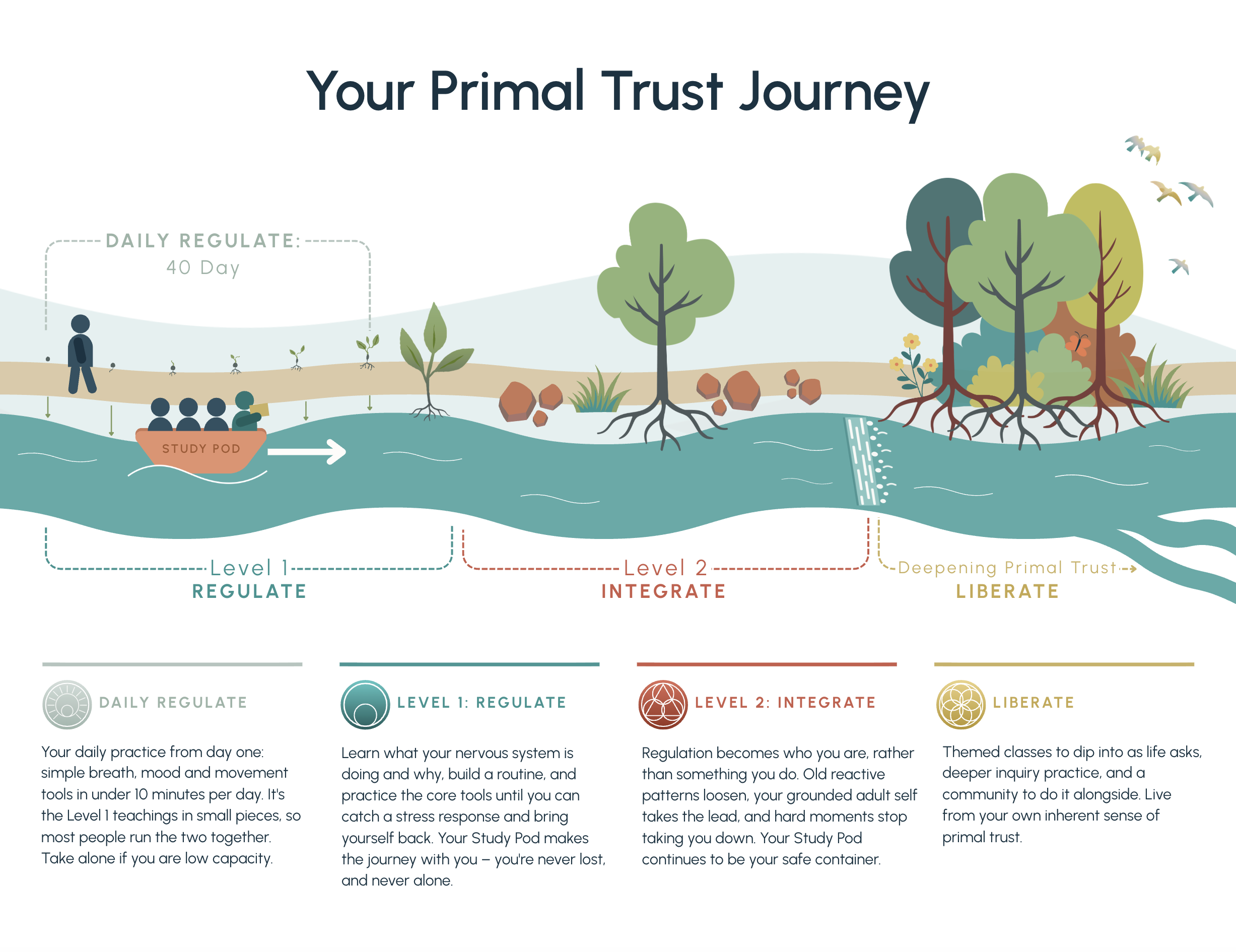
Chronic illness often persists when the nervous system and immune system remain locked in a state of perceived danger, disrupting vagus nerve signaling, driving inflammation, and stalling cellular repair. By restoring vagal tone and brain body communication, Primal Trust prepares the body to respond to detox, antimicrobial, nutritional, and functional medicine protocols. As Phase Zero, it creates the physiological safety needed for immune balance, mitochondrial repair, and lasting healing.
Anyone who works closely with chronic illness eventually notices a frustrating and familiar pattern. Patients follow well designed protocols, invest time and money into care, and do everything asked of them, yet their bodies fail to respond in a predictable or lasting way.
This disconnect is often interpreted as a problem with compliance, motivation, or complexity of illness, but over time it becomes clear that something more fundamental is happening beneath the surface.
The missing piece is biological readiness.
Before the body can detox, repair tissue, clear infection, or rebuild energy, it has to believe it is safe enough to do so. That belief is psychological and is encoded through nervous system signaling, immune regulation, and cellular metabolism.
Primal Trust was built to address this foundational layer, the phase that determines whether healing inputs can actually be received. That is why it sits at the beginning of care, before protocols are applied.
“When your patients cannot follow the plan, it’s often a capacity issue. It’s not about them not being motivated. A dysregulated nervous system limits their ability to tolerate change, process stress, and stay consistent, even when they desperately want to heal.”– Dr. Cathleen King
Chronic Illness as a Breakdown in Communication
Chronic illness increasingly points back to disrupted communication between the brain, immune system, and peripheral tissues. When that communication becomes distorted, the body remains oriented toward protection long after the original stressor has passed. This is an automatic survival response driven by the nervous system.
The vagus nerve plays a central role in this process. As the primary parasympathetic nerve, it connects the brain to most major organs and continuously relays information upward about immune activity, inflammation, and metabolic status. Roughly eighty percent of its fibers carry signals from the body to the brain, shaping how the brain interprets internal conditions.
When vagal tone is strong, the brain receives consistent feedback that systems are regulated and stable. Under chronic stress, trauma, infection, or toxic exposure, that feedback becomes distorted. The brain remains on alert, interpreting neutral or healing related signals as potential threats. Over time, this false danger loop becomes the default state.
Immune Activation and the Loss of the Off Switch
Every organ contains tissue resident macrophages that function as local immune regulators. These include microglia in the brain, Kupffer cells in the liver, and alveolar macrophages in the lungs. Their job is to respond quickly to perceived threats and then stand down once balance is restored.
The vagus nerve helps regulate this process through the cholinergic anti-inflammatory pathway. Acetylcholine released through vagal signaling binds to alpha 7 nicotinic acetylcholine receptors on macrophages, reducing excessive cytokine production and calming inflammation.
When vagal tone is suppressed, that regulatory signal weakens. Macrophages remain primed, cytokines continue circulating, and inflammation becomes persistent rather than responsive. This pattern shows up across diagnoses and explains why many patients experience ongoing symptoms even after the original trigger has been addressed.
The Cell Danger Response and Stalled Healing
This chronic defensive state aligns with the Cell Danger Response model described by Robert Naviaux. The Cell Danger Response is a protective metabolic shift in which cells prioritize survival over growth and repair. Mitochondrial energy production decreases, inflammatory signaling increases, and normal cellular communication is altered.
In a healthy system, this response moves through distinct stages and eventually resolves. Chronic stressors can interrupt that progression, leaving cells locked in defense mode. When this happens, interventions aimed at killing pathogens, mobilizing toxins, or increasing metabolic demand often backfire or fail to produce durable improvement.
Completion of the Cell Danger Response requires a clear signal that danger has passed, and that signal is heavily mediated by the nervous system.
Why Nervous System Regulation Comes First
Primal Trust was designed to restore this missing signal. By targeting nervous system regulation first, it changes the internal environment in which all other therapies operate. The practices focus on restoring parasympathetic signaling, improving vagal tone, and reducing limbic threat responses that keep the body on high alert.
Breathwork supports acetylcholine release and immune modulation. Somatic practices provide bottom up input that helps the brain reassess safety based on physical cues rather than fear based interpretation. Perception rewiring reduces hypervigilance toward internal sensations, which is especially important in chronic illness populations. Daily regulation practices help restore autonomic flexibility and prevent stress accumulation from overwhelming the system again.
Over time, these inputs create a biological context that supports repair rather than resistance.
What Changes When the System Feels Safe
As nervous system regulation improves, downstream effects become evident:
- Pro-inflammatory cytokines such as TNF alpha, IL 6, and IL 1 decrease.
- The cholinergic anti-inflammatory pathway becomes more active.
- Tissue resident macrophages reduce excessive reactivity and shift from inflammatory M1 states toward reparative M2 phenotypes.
- Mitochondrial respiration improves, cellular repair pathways reengage, and communication between the brain and body becomes coherent again.
In this state, protocols that previously felt overwhelming or ineffective often begin to work with less intensity and greater durability.
Why Phase Zero Matters
Healing protocols do not fail because they are poorly designed. They fail because the body is still operating under the assumption that survival must come before repair.
Until that assumption changes at a biological level, no amount of supplementation or intervention can override it.
Primal Trust exists to restore that foundation. By addressing nervous system signaling, immune regulation, and cellular safety first, it creates the conditions that allow medical and functional care to do what it is intended to do.